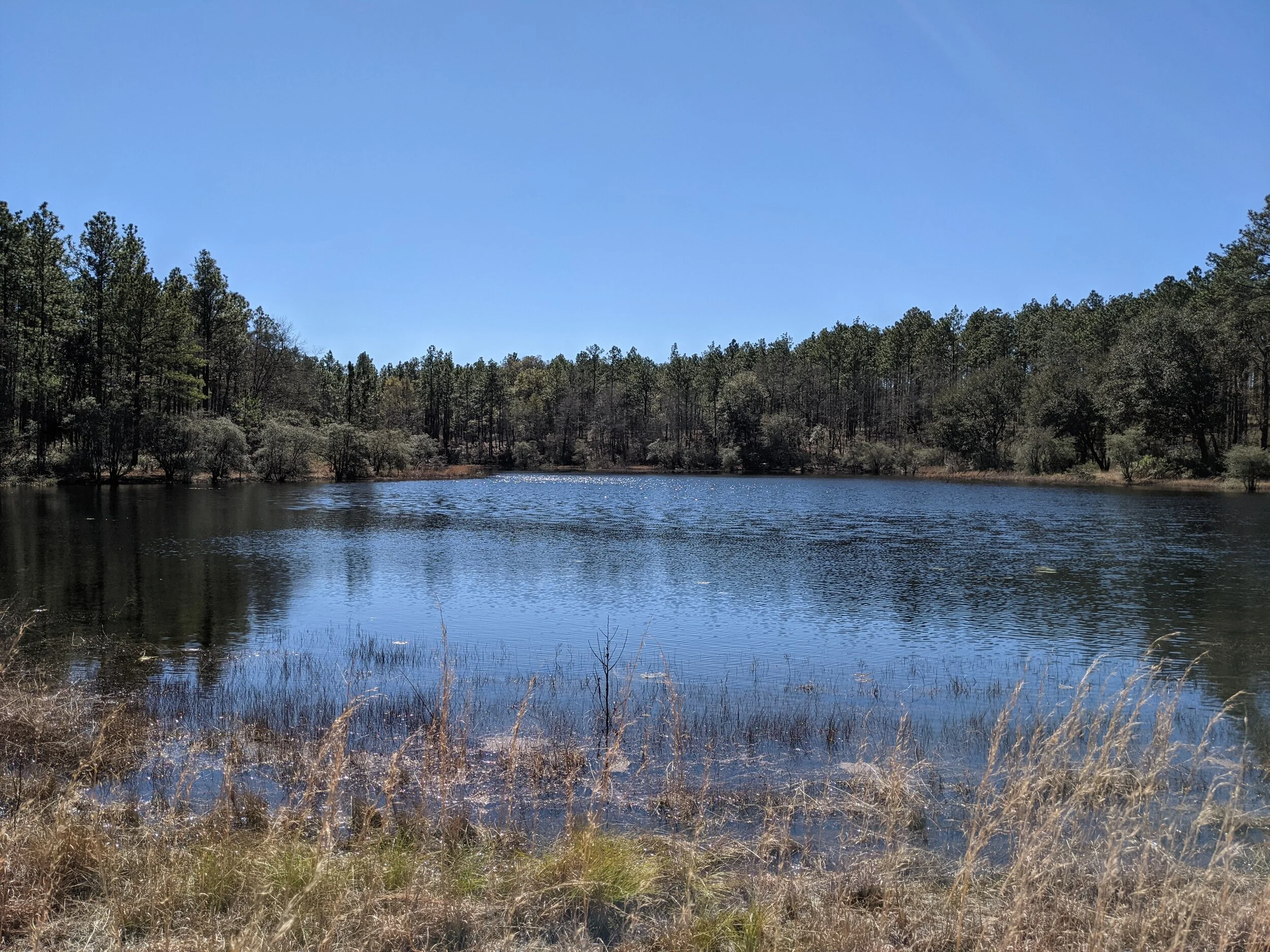
Movement of gopher frogs on the conecuh national forest

To assess the post-breeding movements of gopher frogs on the Conecuh National Forest, we used VHF radiotelemetry to directly track frogs as they migrated from their breeding pond to their upland refugia. For some frogs, this journey took more than 100 days and more than a kilometer! We then compared the movement of these frogs to movements recorded in other locations to better describe the movement patterns of the species and offer population-specific managment recommendations.
upland microhabitat selection of gopher frogs in alabama
This project built upon the data collected in determining gopher frog movements by also measuring microhabitat characteristics at upland frog burrows as well as random points in the landscape. By comparing microhabitat metrics between thesee, we were better able to determine which specific microhabitat characteristics are important for gopher frogs as they choose refugia in the uplands. As gopher frogs spend most of their time in the uplands, this research has very interesting management implications as we work to conserve these frogs.

amphibian community breeding ecology in ponds on the conecuh national forest

This project relied on multi-species, multi-method occupancy models using data from call surveys, dip net surveys, and wetland assessments. These models offered inference as to which wetland characteristics were most important for gopher frogs as well as other amphibian species, and contributed towards determining species associations as well as identifying potential wetlands for gopher frog reintroductions.
Conservation genetics of gopher frogs in alabama
As gopher frogs in Alabama are geographically isolated from other populations, the possibility of genetic drift and inbreeding depression is a major concern. While capturing gopher frog adults and tadpoles, we took buccal swabs from adults and tail clips from tadpoles for genetic research. The DNA from these samples has contributed to RADseq analysis, and is expected to inform the need or lack thereof of genetic translocation for maintenance of genetic diversity of gopher frogs in Alabama.

Landscape genetics of gopher frogs in florida

This project is a collaboration with researchers at the University of Georgia, utilizing published microsatellite data on gopher frogs in Florida to assess genetic connectivity and potential geographic pathways and barriers influencing connectivity using gravity models.